
Use of rape shield laws may risk right to fair trials, Supreme Court warns

Ruling could open the door to multiple appeals from those convicted of sexual offences
Scotland’s courts are being too “restrictive” in how they apply laws designed to protect the victims of rape, according to a ruling from the UK’s most senior judges, which could lead to multiple appeals from those convicted of sexual offences.
In a landmark ruling by the UK Supreme Court, five judges concluded that the approach over what evidence can be heard in court risked depriving defendants of their right to a fair trial.
The professional body for Scottish solicitors said the nation’s courts will have to change how they handle certain types of evidence in sex offence trials, describing it as a judgement that “goes to the very core of the right to a fair trial”.


However, victims’ organisations warned that the ruling would have a “profound and distressing” impact on survivors of sexual violence, who were now in an “incredibly uncertain position”.
The judgement was handed down after two men previously convicted of rape, David Daly and Andrew Keir, launched an appeal, having challenged issues around inadmissibility of evidence. While those appeals were unanimously dismissed, with the Supreme Court deciding that their trials had been fair, the full ruling will have wider repercussions.
The five judges - Lord Reed, Lord Hodge, Lord Hamblen, Lady Rose, and Lady Simler - said that evidence about a complainer's credibility or previous or subsequent sexual behaviour was almost always excluded from trials for sexual offences in Scotland.
This approach, the judges concluded, was “liable to result in violations of defendants' rights to a fair trial under article 6 of the [European] Convention [on Human Rights]”. The article in question guarantees a fair trial so that the defendant can present a full defence to the charge against him.
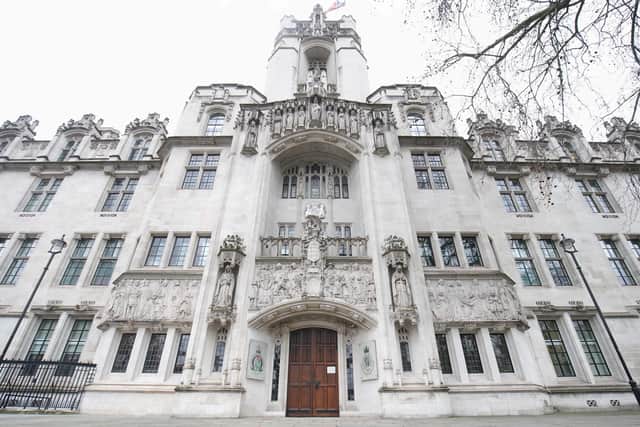
But to do so, the judges explained, the defendant needs to be able to call evidence to establish his defence and to challenge the evidence called by the prosecution. “Excessive restrictions on the evidence or questioning which may be led at trial can therefore be incompatible with the right to a fair trial,” they added.
The ruling said that Scottish courts should “modify” their current approach regarding the admission of evidence in sexual offence trials.
Known as ‘rape shield’ laws, Sections 274 and 275 of the Criminal Procedure (Scotland) Act 1995 were drawn up to protect complainers in sexual offence trials by regulating, and often excluding, evidence of their sexual history or character. The former section establishes the general rule that such evidence is inadmissible, while Section 275 allows for exceptions in specific circumstances.
The judges said it may be “inevitable” that a fair trial for sexual offences will require the complainer to be asked some intrusive questions about her private life.
“In our adversarial criminal justice system, by pleading not guilty, the defendant is necessarily challenging the complainer’s version of events.” they said. “The defence should consequently be able to seek to undermine the credibility of the complainer’s testimony, and to rely on evidence of her behaviour, sexual or non-sexual, before or after the events in question if it is relevant to the question of consent.”
The Law Society of Scotland, which had intervened alongside the Faculty of Advocates to highlight what it described as “growing concerns” over how certain evidence is being handled in sexual offences cases in Scotland, welcomed the judgement.
Its president, Patricia Thom, said many lawyers had become concerned about “accused persons being denied the right to present potentially relevant evidence at trial,” following changes in Scottish common law.
She said: “Like many jurisdictions around the world, Scotland has worked hard to ensure that complainers are protected from unjustified intrusive questioning, while also upholding the accused’s right to present a full and proper defence. That balance was carefully set out in legislation passed by the UK and Scottish Parliaments and approved by both our highest courts and the European Court of Human Rights.
“Yet, in recent years, many in the legal profession have become concerned that the approach in some cases did not reflect that intended by parliament resulting in accused persons being denied the right to present potentially relevant evidence at trial. The Supreme Court has found the concerns we expressed are justified. It has agreed that the current approach risks depriving accused persons of their right to a fair trial under the European Convention.”
Ms Thom added: “It is now clear that Scottish courts will need to revise their approach in these cases and return to the system agreed by the UK and Scottish Parliaments, giving trial judges greater discretion to decide what questions may or may not be asked.
“Our decision to intervene in these cases was not taken lightly but the decision of the court today demonstrates that we were right to do so, in the public interest.”
Rape Crisis Scotland said that although it was “pleased” to see the Supreme Court reject the individual appeals by Daly and Keir, it had misgivings about the impact of the ruling in full.
Sandy Brindley, its chief executive, said: “The wider implications of this ruling will have a profound and distressing impact on survivors of rape and sexual violence who, through no fault of theirs, now find themselves in an incredibly uncertain position. There is a lot of work within the criminal justice system that needs to happen urgently which must ensure their concerns are addressed.
“Protecting women in rape cases from irrelevant and humiliating questioning has a difficult history in Scotland. We only need to look back five years to find an instance of a complainer in a rape case being asked 11 different questions on what she was wearing immediately prior to and during the incident.
“The Supreme Court judgement cannot mean a return to the days where women are allowed to be routinely subjected to this type of questioning.”
Comments
Want to join the conversation? Please or to comment on this article.