
'Workforce crisis' as hundreds of thousands of NHS shifts understaffed in Scotland

SNP ministers have been told to address the “workforce crisis”.
NHS staff in Scotland are being “stretched beyond their limit” after new figures revealed frontline health workers were forced to grapple with understaffed shifts on hundreds of thousands of occasions last year.
Scottish Labour has warned that the SNP government’s handling of health service workforce pressures is “driving NHS staff to the point of burnout”.
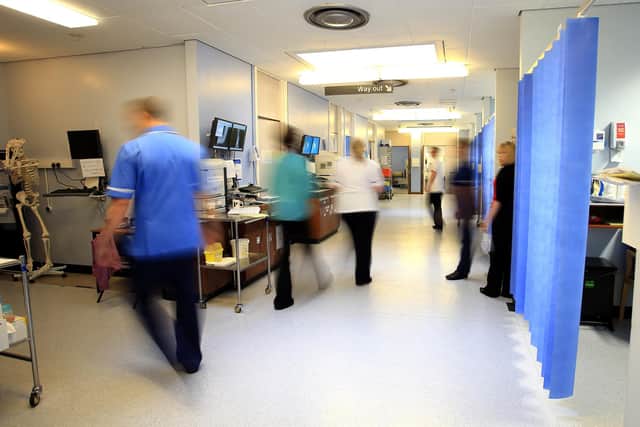

The alarm comes after new data shows frontline NHS workers faced understaffed shifts on thousands of occasions last year.
Figures released through freedom of information (FOI) requests suggest key NHS workers were on understaffed shifts on 348,675 occasions last year.
According to the statistics, obtained by Scottish Labour, there were 333,296 unfilled nurse and midwife shifts in 2024, according to the FOI data.
The data suggests on average NHS managers were struggling to fill more than 900 shifts every day.
Scottish Labour’s health spokesperson Jackie Baillie has called on SNP ministers to “deal with this workforce crisis” in the NHS before it “becomes a doom loop”.
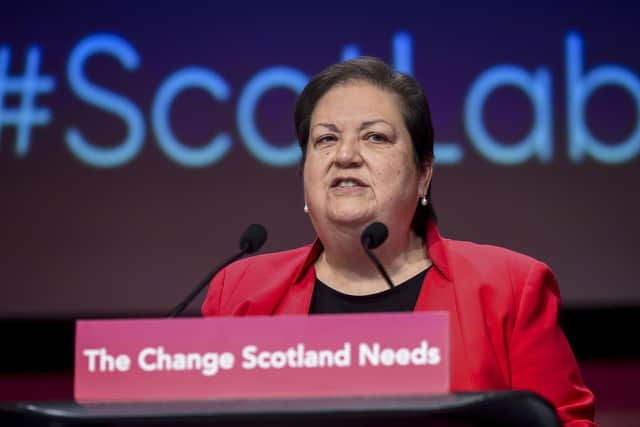
She said: “Working an NHS shift has always been demanding but these alarming figures show our doctors, nurses and midwives are stretched beyond their limit — with patients suffering as a result.
“Our hard-working NHS staff will always do their best but they are let down by an SNP government that fritters away millions on expensive agency staff while leaving doctors without jobs and patients at risk.”
Dame Jackie added: “The SNP government is driving NHS staff to the point of burnout — it must deal with this workforce crisis before it becomes a doom loop.
READ MORE: The scandal of Scottish NHS nurse forced to go private by long waiting list for urgent health check
“Scottish Labour will deliver a proper workforce plan for our NHS so that doctors, nurses and midwives can do the job they are trained to do and patients get the treatment they need.”
The numbers are an estimate as not all health boards held data on unfilled medical shifts whilst some nursing and midwifery figures relate to financial rather than calendar years. The shifts do not include those that were originally uncovered but filled by agency or bank staff.
In a report published earlier this year, the Royal College of Nursing Scotland warned that in the 12 months to May 2025 “at no point has NHS Scotland employed the number of nursing staff needed to deliver safe and effective care”.
The fears come amid reports the Scottish Government is attempting to “airbrush their failure” as new guidelines on the recording of waiting times will see both the number of the longest waits and the average/median length of waits artificially reduced.
According to reports, thousands of cases where patients miss or cancel appointments will be removed from the statistics.
The new guidelines will let health boards “reset to zero” waiting times for patients with “unavailability” or those who miss three appointments.
Dame Jackie said: ““This is an absolutely disgraceful attempt by the SNP to attempt to airbrush their failures when it comes to Scotland’s health service.
“Rather than taking responsibility and putting in the hard work that is desperately needed to get a grip on dire waiting times, SNP ministers instead choose to move the goalposts to make themselves look better.”
Scottish Government spokesperson said: “We are immensely grateful to Scotland’s NHS workforce who are working tirelessly to help the health service recover from the pandemic. Thanks to their efforts, Scotland’s core A&E units have consistently been the best performing in the UK for a decade, 97 per cent of patients leave Scotland’s hospitals without delays and we saw record numbers of hip and knee replacements performed last year.
"Through record levels of investment, we have delivered 13 consecutive years of workforce growth, including a 57.2 per cent rise in medical staff since September 2006, and an 18.6 per cent rise in nursing and midwifery staff.
“We are determined to tackle the pressures facing the NHS. However, there is no doubt that many of the external pressures facing our social care sector in particular are a result of UK Government decisions, including increasingly restrictive and hostile migration policies.
“We continually explore what more we can do to support staff and are working in partnership with trade unions to ensure careers in NHS Scotland remain attractive, including through our Nursing & Midwifery Taskforce and our newly established Future Medical Workforce project."
Meanwhile, the Unite union has launched a campaign across Scotland to tackle "a social care crisis" it claims is reaching the "point of no return."
Unite has written an open letter to social care minister Tom Arthur, setting out its demands for the sector.
The three key demands are fair and sustainable pay for registered social care workers that reflects their essential role; a real-terms increase in funding for social care in the Scottish budget 2025-26; and meaningful engagement with all stakeholders to design a long-term future for the sector.
Unite general secretary Sharon Graham said: "There is a social care crisis in Scotland . It is getting to the point of no return whereby social care provision could become irreparably broken. It is outrageous workers' pay is so low.
"Unite is committed to moving the dial and ensuring social care workers get fair pay and decent conditions. Unite will fight for better jobs, pay and conditions for social care workers across Scotland ."
The union, which represents thousands of social care workers in the private, not-for-profit, and public sector, has built its campaign in partnership with testimonies from social care staff.
Unite warns that without urgent Scottish Government intervention and investment, the social care sector could face job losses and more individuals leaving the profession.
A Scottish Government spokesperson said: "Scottish Government funding of health and social care is at a record level. Our 2025-26 budget is investing £21.7bn. This includes almost £2.2 billion investment for social care and integration, delivering on our commitment to increase social care spending by 25 per cent over this Parliament, two years ahead of schedule.
"Many of the external pressures facing the sector are a result of UK Government decisions, including increasingly restrictive migration policies and increases to National Insurance Contributions - which are set to cost the social care sector at least £84 million."
Comments
Want to join the conversation? Please or to comment on this article.