
SNP ministers to axe public sector jobs as near £5bn funding black hole emerges

Shona Robison has warned compulsory redundancies will be considered if “no other route” to cutting jobs is available in order to balance the books.
SNP ministers are poised to shed public-sector jobs after bracing for a near £5 billion funding black hole by 2030 - amid a warning “more than 10,000 workers could be tossed on the scrapheap”.
The Scottish Government’s medium-term financial strategy has revealed public services pressures and “the cost of achieving statutory net zero and child poverty targets” will put strain on the Scottish Government's finances. The door has been opened to compulsory redundancies if not enough jobs are cut through other means.
STUC general secretary Roz Foyer labelled the strategy as “scything cuts to Scotland’s public services”.
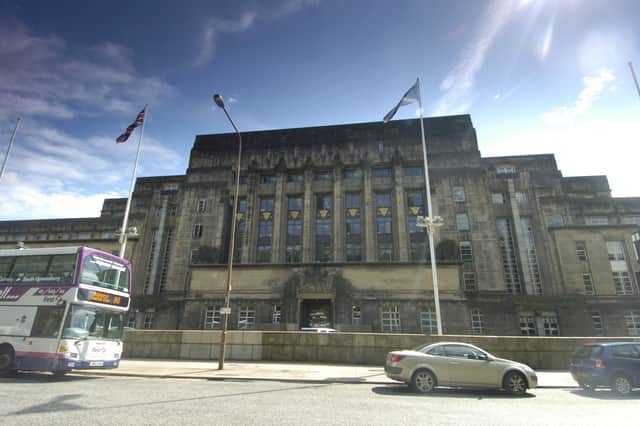

Savings worth £2.6bn will be needed to balance the books for day-to-day spending by the end of the decade.
The document also predicts an additional funding gap of £2.1bn for capital investment plans. Capital spending is forecast to increase from £7.2bn in 2025-26 to £9.2bn by 2030, with more money poised to be allocated to affordable housing, public transport and a flagship strategy to decarbonise buildings.
Finance Secretary Shona Robison blamed the deficit on less money being handed to Holyrood from Westminster than to core UK government departments, but Labour has accused the Scottish Government of having “spectacularly mismanaged Scotland’s budget”.
The Scottish Government is poised to see its social security bill rise to almost £9bn by 2029.
Funding gap could reach £3.5bn
The Institute for Fiscal Studies (IFS) warned the funding deficit could be closer to £3.5bn - rather than just £2.6bn - due to “optimistic” forecasts in the strategy that “assume earnings grow significantly faster in Scotland than in the rest of the UK”.
READ MORE: Scottish Government: Staffing concerns in the civil service as internal communications revealed
A Fiscal Sustainability Delivery Plan (FSDP) sets out that a Scottish Spending Review will set a savings target of between £300m and £700m a year over five years. Efficiency and productivity improvements, alongside reforming public services, is forecast to see savings grow from £600m to £1.5bn a year over the five-year period.
Compulsory redundancies on the table
A target of cutting the public sector workforce by an average of 0.5 per cent every year until 2030 is expected to see savings grow from £100m to £700m a year.
Ms Robison told MSPs the Scottish Government will “reshape and reform our public services”.
She said: “We will set a public sector workforce managed reduction target to reduce staffing levels by an average of 0.5 per cent per year until 2030.
“This will be achieved by reforming our public services as set out in the public services reforms strategy and through natural attrition and recruitment controls.
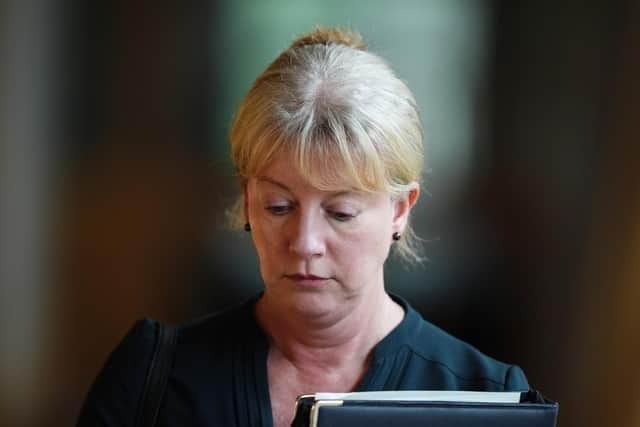
“By taking this action, we will protect valuable frontline services and continue to offer a progressive pay policy, which recognises that our public sector workforce is our most valuable asset.”
Ms Robison insisted “no compulsory redundancies maintains to be the default position”.
But she added: “As a last resort, once all steps have been taken through voluntary severance, through redeployment - if there is no other route and there are no jobs for those people involved, then the compulsory redundancy can be considered.”
The delayed document warns “without action, the difference between projected funding and estimated spending is set to grow from a balanced budget in 2025-26, to £2.6 billion in 2029-30”.
Net zero, poverty and services pressures
It adds that “day-to-day government spending … continues to face pressures from growing demand for public services and the cost of achieving statutory net zero and child poverty targets”.
The document says: “The devolved public sector wage bill is also a significant driver of projected costs, recognising the proportionately larger and better paid public sector in Scotland.
“This is due to investment that Scottish Government has made in our workforces over many years. However, the wage bill needs to be more sustainable going forward. Spending pressures in health and social care are particularly acute.”
David Phillips, associate director at the IFS, stressed “tougher financial choices lie ahead, including public sector job cuts”.
He added: “By 2029-30, a funding gap of £2.6bn a year for day-to-day spending is projected. That is roughly equivalent to spending on Scottish police and fire services, or the revenue from increasing all rates of income tax in Scotland by around 4 percentage points.
“Current forecasts for the contribution of devolved tax revenues to the Scottish Budget are likely optimistic, as they assume earnings grow significantly faster in Scotland than in the rest of the UK from 2026–27 onwards. All else equal, if earnings instead grew at the same rate as in the rest of the UK, the ‘funding gap’ for day-to-day spending would be closer to £3.5bn.”
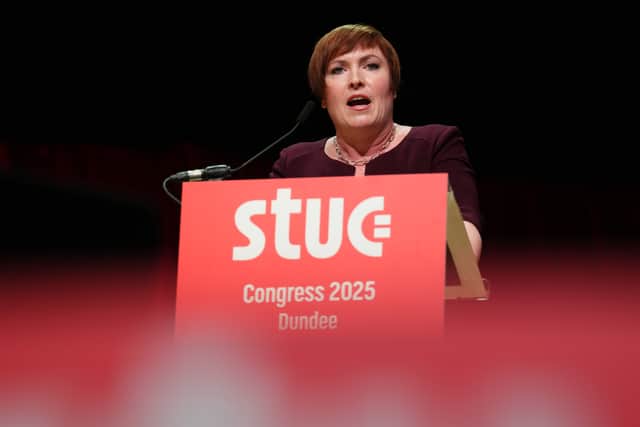
Ms Foyer said: “They may dress it up as efficiencies, but this strategy proposes scything cuts to Scotland’s public services. Over the next five years, more than 10,000 workers could be tossed on the scrapheap.
“At a time when ordinary people are crying out for help, our population is ageing, the climate crisis deepens, and public services are starved of funding, this strategy should have been a turning point towards a fairer, more progressive taxation system. Instead, we got cuts to our public services presented to us as some form of salvation.”
Political ‘courage’ demand
The trade union leader added: “It’s hollow to keep talking about improving schools, hospitals and care homes without acknowledging that it will take serious, sustained public investment. You cannot cut the staff who support these services and expect them to improve.
“We know Scottish ministers face fiscal constraints, but we need vision and political courage to build a better Scotland. Unfortunately, today ministers have chosen to cut public services rather than use their powers to help redistribute wealth, tackle inequality and invest in our collective future.”
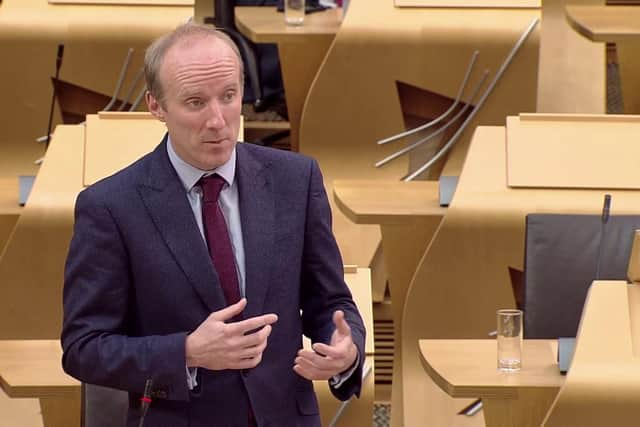
Scottish Labour finance spokesperson Michael Marra said: “This SNP Government is gearing up to make cuts because it has spectacularly mismanaged Scotland’s budget. It is SNP ministers and their choices that have created a structural resource deficit of £2.6bn.”
He added: “The SNP’s plans mean a funding cut of at least 12 per cent to Scotland’s NHS and huge reductions in frontline workers – cuts to mitigate their incompetence.
“All of this comes at a time when A&E waiting times are atrocious, cancer waiting times are at their worst point on record, ministers are admitting lives are being lost, domestic abuse statistics are at a record high, and housebuilding rates are plummeting.”
Scottish Conservative shadow finance and local government secretary Craig Hoy branded the strategy “too little, too late to address years of gross financial incompetence”.
He said: “Thanks to the nationalists’ mismanagement Scots will be facing continued tax rises or cuts to public services in the coming years.
“Their workforce reduction plans will come nowhere near to reversing the ballooning public sector on their watch, and they’ve said nothing to address a £5bn black hole in Scotland’s finances that is looming in future years.”
Comments
Want to join the conversation? Please or to comment on this article.