
Hospital at centre of fatal water contamination scandal 'opened too early'
Just days after hospital bosses admitted a link between infections and contaminated water, the hospitals inquiry had heard that Scotland’s super-hospital opened too early.
Scotland’s super-hospital opened too early despite safety fears over the design of the building where contaminated water has been linked to the deaths of children, an inquiry has heard.
The evidence came as MSPs heard the deaths at Queen Elizabeth University Hospital in Glasgow branded "the most appalling and disgusting hospital scandal to engulf our health service”.
NHS Greater Glasgow and Clyde (NHSGGC) has admitted there was a link between water contamination and child cancer patients’ infections at the campus.

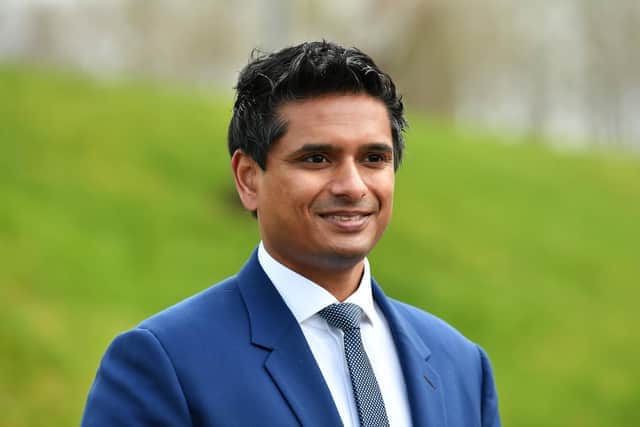
Dr Sandesh Gulhane MSP, an NHS GP and the Scottish Conservatives’ health spokesman, said there had been an “unforgivable cover-up” at the health board.
In questioning the SNP’s health secretary in Holyrood on Tuesday, Dr Gulhane said: “This is the most appalling and disgusting hospital scandal to engulf our health service.
“After over a decade of denial we have had to drag the health secretary here today after NHS Greater Glasgow and Clyde admitted at the 11th hour in the most sleekit way that the water system at the hospital had caused infections in cancer patients.”
He added: “Hospital inspections as early as 2015 exposed the fact the water at the hospital was not safe and there was a high risk of subsequent infections, but NHS Greater Glasgow and Clyde spent years covering it up, silencing whistleblowers, gaslighting families and betraying the trust of patients.”
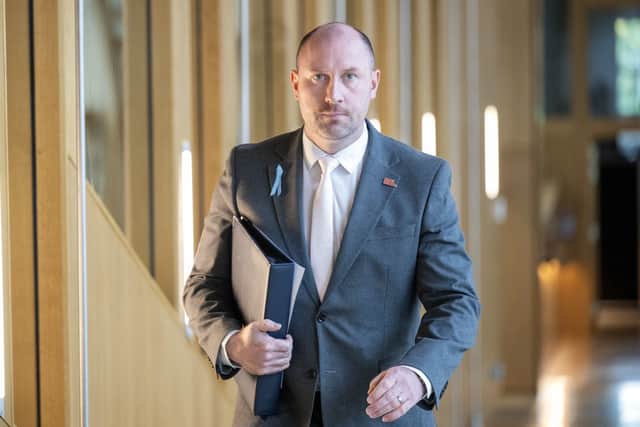
In response, Health Secretary Neil Gray said he “takes serious all concerns on patient safety and care”, however he refused to be drawn on the specific questions he was asked in the Holyrood debating chamber on Tuesday afternoon.
He said the government has previously taken action after former health secretary Jeane Freeman launched the public inquiry in 2019 - so far, the inquiry has cost taxpayers more than £31 million.
Dame Jackie Baillie MSP, Scottish Labour’s health spokeswoman, also grilled Mr Gray on the inquiry findings, and added: “I want to remind the chamber that when the hospital opened in 2015, Nicola Sturgeon was First Minister, Shona Robison was health secretary and John Swinney was finance minister.
“Their fingerprints are all over this and we need to know what they knew and when they knew, and exactly who pressured the health board to open the hospital before it was safe, causing the deaths of children.”
Speaking after the topical question at Holyrood, Dr Gulhane criticised Mr Gray for a “lack of answers” and “attempts to try and hide behind the ongoing inquiry,” adding: “Neil Gray must urgently reflect on his lack of clarity and guarantee he will commit to delivering justice – including criminal proceedings if appropriate – for anyone involved in this scandal, including his colleagues in the SNP.”
It comes as NHSGGC’s legal representative gave evidence to the Scottish hospitals inquiry on Tuesday.
Peter Gray KC said it was clear from the evidence led that there had been “significant failures” on the part of Scotland’s largest health board, and offered a “full and unreserved apology” for the distress and trauma experienced by patients and families.
He told the inquiry: “NHSGGC has listened to the evidence of the expert panel, and whilst no definite link between any infection and any confirmed source of infection was ever established, the experts all agree that on the balance of probabilities, there was an infection spike apparent during the water incident.
“NHSGGC accepts that there was, on the balance of probabilities, an increased risk of infection during that period, and that as acknowledged in the written submission, on the balance of probabilities, there is a causal connection between some infections suffered by patients and the hospital environment, and in particular the water system.”
The Queen Elizabeth University Hospital and the Royal Hospital for Children opened in April 2015, costing £840m.
In March 2018 it emerged that three children were being treated for infections that may be linked to contaminated water. A few months later in September 2018, child cancer patients at the Royal Hospital for Children were moved from two wards due to the water supply issue.
The health board told the hospitals inquiry that infection rates fell after remedial works, including changes to the water system, were carried out in 2018.
This week Dr Gulhane said whistleblowers had told him there are still ongoing water supply issues at the super-hospital, including taps being out-of-order on a monthly basis and dishwashers being unusable for long periods of time.
The Scottish Government launched the hospitals inquiry in September 2019 into the two Glasgow hospitals, and into the new children’s hospital in Edinburgh.
In March 2021 an independent review found 84 children were infected with rare bacteria while undergoing treatment at the hospital and at least two deaths were in part as a result of the infections.
NHSGGC was named as a suspect in a corporate homicide investigation following the deaths of three children and 73-year-old Gail Armstrong, who died after contracting a fungal infection linked to pigeon droppings.
One of the children in this case is 10-year-old Milly Main, who died in August 2017 when a line delivering medicine to her became infected with stenotrophomonas bacteria.
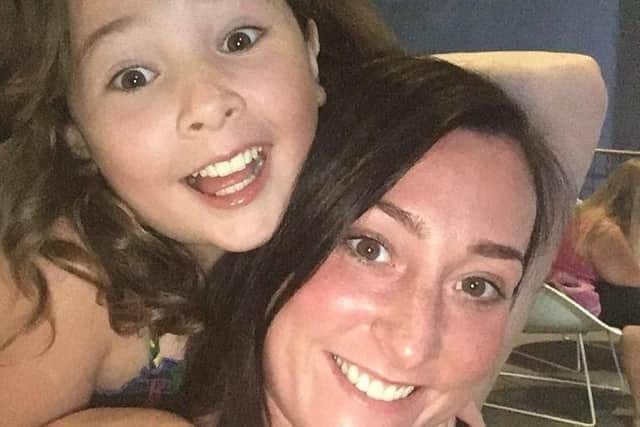
Her mother Kimberly Darroch has repeatedly said she has been lied to by officials and sees her daughter’s death as “murder”.
After the health board admitted a link between infections and contaminated water, Ms Darroch said it was “good news”, but "highlights how hard families have had to fight just to have the truth recognised”.
Scottish Labour leader Anas Sarwar has called for senior hospital officials and politicians to also be investigated, including Mr Swinney and Ms Sturgeon.
In his evidence to the inquiry on Tuesday, Mr Gray also acknowleged that whistleblowers “were not treated in a manner that their concerns to be fully listened to and acted upon,” describing such a situation as taking place against the background of “an unprecedented situation of significant complexity,” where there were tensions among staff about how it should be handled.
NHSGGC’s final written submission to the public inquiry also accepted numerous other issues when the hospital was officially handed over in 2015, as more than 200 contractors were still on site.
It also accepted there were too few resources to manage the handover and that a request for extra staff was refused.
For example, ward 2A, part of the Schiehallion unit treating children with blood problems and cancer, opened without Hepa filters to trap airborne particles. While the problem was sorted immediately, the health board admitted this should never have happened.
Comments
Want to join the conversation? Please or to comment on this article.