
Details of planned Edinburgh tram expansion costing up to £2.9bn published

A 12-week consultation has been launched into new routes to Granton and Royal Infirmary
Details of a planned expansion of Edinburgh’s tram system costing up to £2.9 billion have been published as the proposals are put out for consultation.
Council leaders are seeking views on new routes to Granton in the north and the Royal Infirmary and BioQuarter in the south.
Stephen Jenkinson, the transport and environment convener, said Edinburgh is the fastest growing city in Scotland, with more than 60,000 new residents expected over the next 20 years.
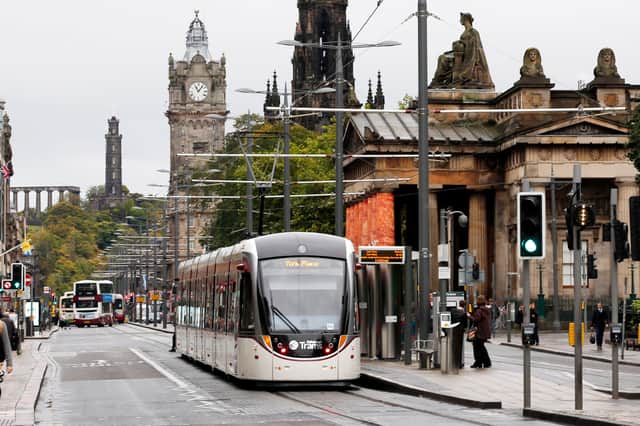

“With regards to mass public transport in Edinburgh, doing nothing isn’t really an option,” he said.
A £207 million extension from Picardy Place to Newhaven was opened in 2023, with the trams previously only running on a route between Edinburgh Airport and York Place, which opened in 2014 after years of delays and spiralling costs.
The latest proposals are more ambitious and would cost between £2 billion and £2.9 billion, depending on the final options selected. For comparison, the Queensferry Crossing, which opened in 2017, cost £1.35 billion.
Council bosses have outlined two possible options for the planned section between Granton and the city centre, with one going via Orchard Brae and the other following the Roseburn Path.
The former would head to the west end of Princes Street along Orchard Brae, Queensferry Road, the Dean Bridge and Queensferry Street, and would cost an estimated £650 million to £850 million.
The latter would connect to the existing tram line west of Haymarket via an old railway line, which winds from Crewe Toll before reaching Craigleith and heading towards the west end and city centre. It would cost an estimated £350 million to £480 million.
Officials said running the tram over the historic Dean Bridge would present an “extreme challenge” from an engineering perspective, which partially accounts for the much greater cost of the first option. “It’s fair to say it’s a risk,” said Mr Jenkinson.
However, a local campaign has opposed the Roseburn Path option because it is now a popular walking and cycle route.
In an attempt to address this, officials said a dedicated walking, wheeling and cycling corridor would be incorporated into the design, segregated from the trams.
They said tram journey times would be faster and more reliable via the Roseburn Path because it is off-road.
Officials recommended Roseburn Path as the "preferred route" last year, but it was agreed both options would go out for consultation following protests over the loss of the cycle path.

Meanwhile, the planned extension south from the city centre to the Royal Infirmary and BioQuarter would begin at Princes Street before crossing North Bridge and running along Nicolson Street, Newington and on to Cameron Toll, and then heading west.
The ambitious expansion would require external funding, such as from the Scottish Government. “We can answer the question as to how much, but where the money comes from is probably going to be the next stage,” Mr Jenkinson told journalists.
Officials said it is not yet possible to say when work might begin or when the extensions could be completed.
City leaders are also working closely with Midlothian and East Lothian councils regarding “potential future mass transit connections” beyond the Royal Infirmary.
This includes exploring a “tram-train” - a light rail vehicle than can operate on tram and rail tracks - concept with Network Rail on the old Edinburgh South Suburban Railway.
Other potential options include connections with Musselburgh railway station and Queen Margaret University in East Lothian and to Shawfair, with interchange opportunities into Midlothian and the Scottish Borders.
Mr Jenkinson said: “I’m pleased that we’ve reached this key stage for extending our multi award-winning tram service. We need to prepare for the future.
“Edinburgh is the fastest growing city in Scotland, with more than 60,000 new residents expected over the next 20 years. Whilst this shift is a true sign of our success, it brings real pressure on our communities, and crucially on the city’s transport infrastructure on which we all rely.
“Managing this growth also means tackling the climate, nature and housing emergencies. To meet these significant challenges, we need to look for bold and ambitious solutions and the tram extension is central to this.
“Edinburgh Trams already offers a reliable and fast service, allowing residents and visitors to move around sustainably and efficiently, and with some of the cheapest fares in the country. The broader benefits of cleaner air and emphasis on active travel surrounding the network are equally as important.
“Our overarching vision is to truly link our city for the benefit of all. From our flagship £1.3 billion development at Granton Waterfront through to the city centre, our world-famous universities, cultural hubs, brilliant local businesses, new housing developments, hospitals and beyond; our transport network must move with the times.
“The new developments we will see along the tram route will be key to Edinburgh’s prosperity for generations to come. I’d encourage everyone to engage with this consultation and help to shape the next chapter in the history of Edinburgh’s transport.”
The consultation will run for 12 weeks until November 17. The council said it will inform the development of a strategic business case (SBC), which will be presented to the transport and environment committee next year.
Speaking to journalists, Mr Jenkinson stressed the consultation is not “a referendum on whether we have trams or don’t have trams”, adding: “We do have trams and what we’re trying to do is develop the future of trams in Edinburgh.”
Comments
Want to join the conversation? Please or to comment on this article.