
Assisted dying legislation rejected by MSPs following emotional debate in Holyrood
Liam McArthur, the MSP behind the bill, said many of those who voted against it would come to regret it deeply
Landmark assisted dying legislation has been rejected by MSPs following a historic and highly emotional vote in Holyrood.
In a decisive result, the Assisted Dying for Terminally Ill Adults (Scotland) was defeated by 69 votes to 57, with one abstention.
It would have seen Scotland become the first part of the UK to legislate for assisted dying.
Earlier, Liam McArthur, the Liberal Democrat MSP behind the bill, made an emotional, last-ditch appeal to those who remained conflicted.
He said there was overwhelming public support for assisted dying, and many of those voting against it would come to regret it “deeply”.
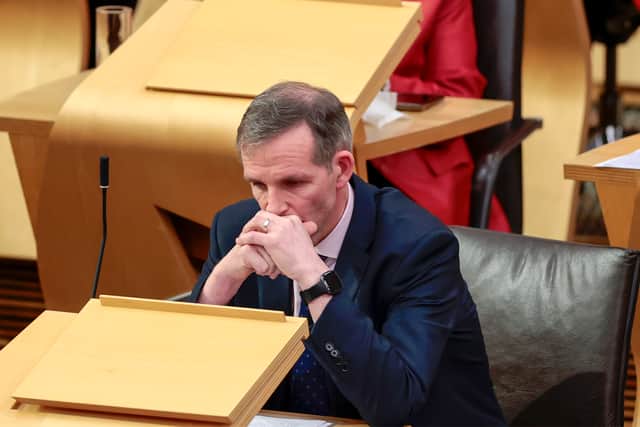

Mr McArthur said rejecting the bill would leave ever increasing numbers of dying Scots more isolated and vulnerable. Both sides of the debate expected the result to be closer.
Under his legislation, two doctors would have been required to confirm that a person was terminally ill and had the mental capacity to request an assisted death. Only those who could "reasonably be expected to die within six months" would have been eligible, following an amendment to the bill last week.
Many MSPs gave emotional speeches during the final debate in Holyrood on Tuesday night.
Lorna Slater, the former co-leader of the Scottish Greens, broke down as she recalled her father’s “beautiful” assisted death in Canada, surrounded by family.
”I wish that death for myself,” she said. “I wish it for anyone who wants it for themselves. I don’t mind if you would never want this choice for yourself, but please, please don’t prevent other people from choosing it for themselves. We should all have the right to choose.”
Jeremy Balfour, who has a physical disability, told colleagues disabled people were “frightened”.
“In passing this bill we would be opening a Pandora’s box,” he said, with “no meaningful protection” against coercion. “I'm begging you to consider the consequences for the most vulnerable,” he urged MSPs.
Pam Duncan-Glancy, the first permanent wheelchair user elected to the Scottish Parliament, also said the bill would put sick and disabled people at risk. “If this bill passes, there is a risk that it will be easier to access help to die than help to live,” she said.
READ MORE: How did your MSP vote on assisted lying law?
SNP MSP George Adam fought back tears as he spoke of his wife Stacey, who has multiple sclerosis.
“She carries it with remarkable strength”, he said. “She also said that if the worst should ever come to her, if she was ever facing that unbearable suffering at the end of life, she would want a choice.
“For many, that end comes with peace and comfort. For others, it comes with profound suffering - a loss of independence and a loss of dignity.”
Alex Cole-Hamilton, the leader of the Scottish Liberal Democrats, also struggled to contain his emotions.
“I have no real fear of death itself, but I have an abundant fear of dying,” he said. “Uncontrollable, breakthrough pain frightens me. Asphyxiation and an inability to swallow frighten me more than anything else. A loss of my identity or the recognition of those I love frightens me.
“I want to be able to choose a different end - to remain the author of my life story until the very last word. But the law, as it stands, makes death a lottery - a potentially cruel and terrifying uncertainty.”
SNP MSP Michelle Thomson, who backed the bill, appealed for colleagues not to abstain.
“The margin must be clear enough to give confidence that this parliament has reached a decisive conclusion”, she said. “So those of you who may be considering abstaining, I urge you to vote so that we have the clearest indication we can of the will of this parliament.”
Earlier, Health Secretary Neil Gray, who voted by proxy after he was admitted to hospital on Monday night, confirmed he would abstain on the bill, reflecting the Scottish government’s neutral position.
The SNP’s Jamie Hepburn was among a handful of MSPs who supported the legislation at stage one but switched to oppose it. He said it was the “single most difficult matter” he has had to wrestle with, but he had been left with “lingering concerns”.
Speaking after the vote, Mr McArthur said he was disappointed by the result.
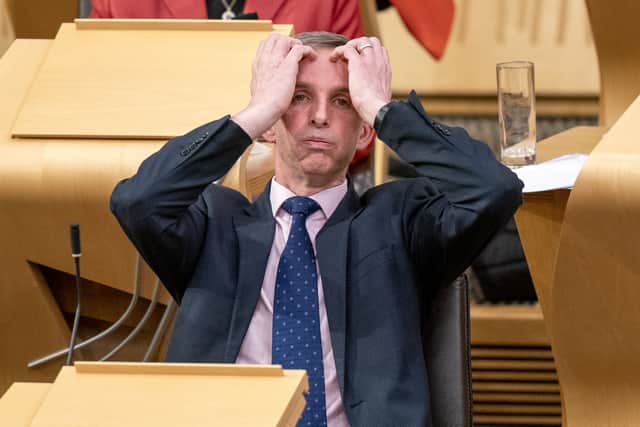
“For many MSPs this will have been the last significant vote they will cast in their time in Parliament,” he said. “I know many have wrestled with their consciences. They will now have to live with their decisions.
“In the coming days, there will be time to reflect on why the bill couldn’t quite make it across the line but for now, I would like to thank my staff, the campaign groups and parliamentarians who have backed this bill and most of all, the terminally ill Scots and their families who have told their stories. I am sorry that Parliament has denied you this compassionate choice tonight.
“However, for now we should be proud that this is by far the most votes that an assisted dying bill has ever secured in the Scottish Parliament. This is not a conversation that is going away. For so long as dying Scots continue to suffer as a result of the lack of choice and safety afforded to them by the current law, I’m certain that it will be an issue in front of Parliament once more."
First Minister John Swinney, who opposed the bill, said: "It was an incredibly passionate debate. Parliament has spoken. I obviously have my own personal opinions and I'm therefore relieved that that conclusion has been arrived at.
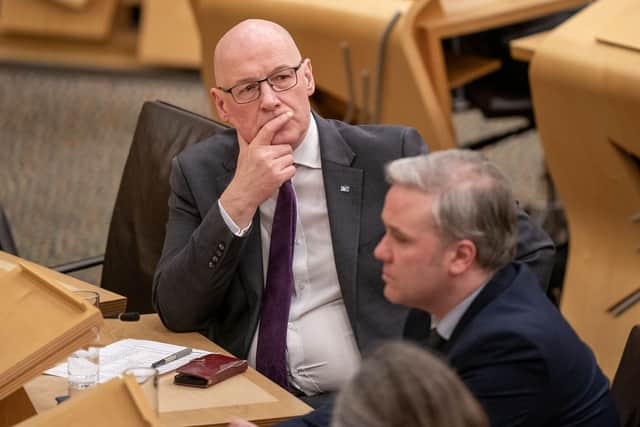
"But I understand tonight, there will be members of parliament who have taken a different view, who supported the bill, who will be deeply sorry that outcome has not been achieved tonight. I respect and sympathise with them on their position tonight."
Gordon Macdonald, chief executive of Care Not Killing, which campaigned against the proposals, said he was relieved by the result.
“We believe the bill posed serious risks to the most vulnerable in society - including disabled people and those suffering from domestic abuse,” he said. “It threatened the relationship between doctor and patient that is central to our NHS.
Holyrood’s assisted dying timeline
“However, we want to thank all MSPs and the Scottish Parliament for the way in which the debate has been conducted, it has certainly shown Holyrood in the best light.
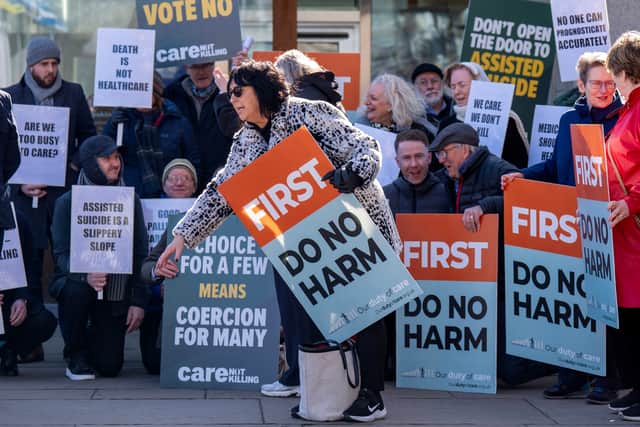
“Looking forward, there is one thing that both sides are agreed on: that we must improve palliative care in Scotland in the future. No one should have to suffer a painful death and we have to invest in palliative care services to ensure that everyone has dignity at the end of life.”
This is the third time MSPs have considered legislation on assisted dying, with two previous attempts having failed at their first vote.
If the vote had passed, Scotland would have been the first part of the UK to legislate for assisted dying, though two Crown dependencies have already done so.
In February, Jersey passed its draft assisted dying law and the legislation is awaiting royal assent so it can formally become law on the island.
The move follows the passage of legislation in the Isle of Man, where the Tynwald became the first parliament in the British Isles to agree a framework for assisted dying in March 2025.
Similar legislation in Westminster is currently stalled in the House of Lords.
Comments
Want to join the conversation? Please or to comment on this article.