
‘Aberdeen should be booming’ says Trump, as he pushes for more North Sea oil

Chancellor Rachel Reeves attacks US president for ‘folly’ of war without exit plan as International Monetary Fund warns UK will be worst hit by energy crisis
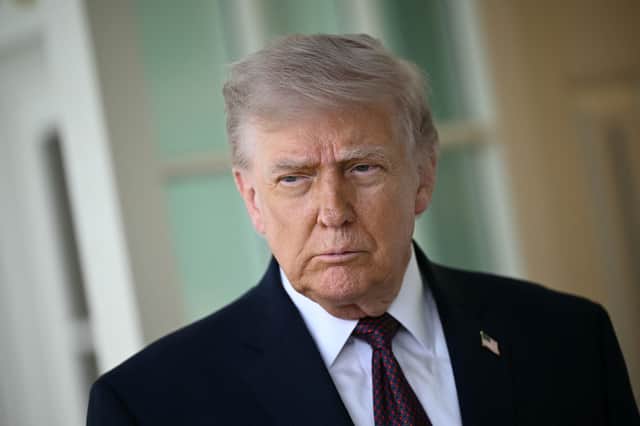
President Donald Trump said “Aberdeen should be booming” as he branded ministers “absolutely crazy” for not boosting oil and gas extraction in the North Sea amid conflict in the Middle East.
Mr Trump took to his Truth Social page on Tuesday to criticise UK policy in the basin, with Prime Minister Sir Keir Starmer’s Labour administration continuing to move away from fossil fuels and towards renewable energy.
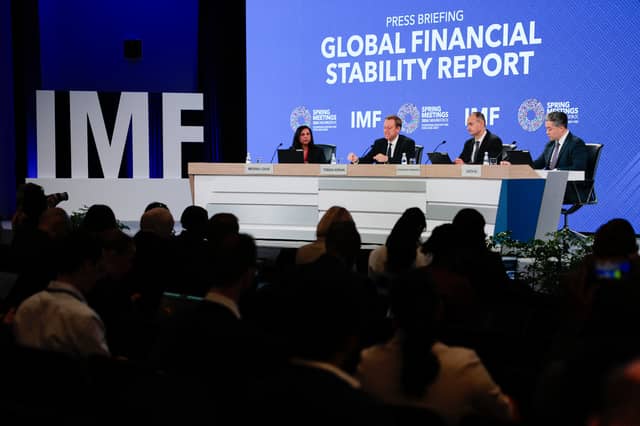
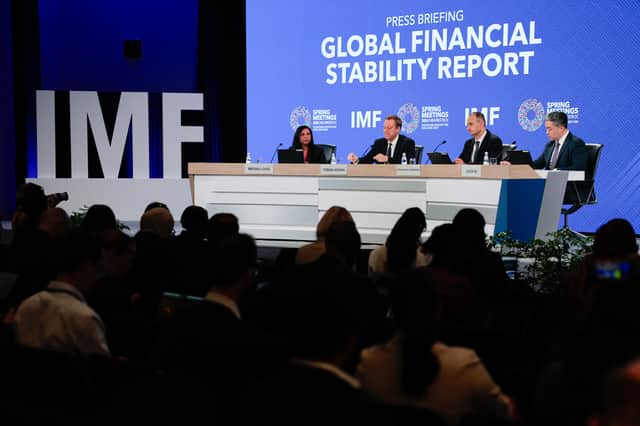
The US leader’s comments came after the International Monetary Fund (IMF) warned the war in Iran has raised the prospect of a “major energy crisis” and said the UK has suffered the sharpest cut to growth forecasts of the largest global economies.
The influential financial body also said the spike in energy prices caused by the war will help push UK inflation towards 4 per cent – double the Bank of England’s inflation target – and contribute to higher costs for households.
Mr Trump said: “Europe is desperate for Energy, and yet the United Kingdom refuses to open North Sea Oil, one of the greatest fields in the World. Tragic!!!
“Aberdeen should be booming. Norway sells its North Sea Oil to the U.K. at double the price. They are making a fortune. U.K., which is better situated on the North Sea for purposes of energy than Norway, should, DRILL, BABY, DRILL!!!
“It is absolutely crazy that they don’t… AND, NO MORE WINDMILLS!”
The US president has long voiced his dislike of wind energy, particularly offshore wind, having launched a battle with the Scottish Government to stop a development that was visible from his Aberdeenshire golf course.
But Chancellor Rachel Reeves hit out at Mr Trump’s “folly” of going to war with Iran without an exit plan.
She said she was “very frustrated and angry” with America’s actions in the Middle East, as the IMF said a global recession could be a “close call” in a severe scenario linked to the conflict.
Ms Reeves said: “This is a war that we did not start. It was a war that we did not want.
“I feel very frustrated and angry that the US went into this war without a clear exit plan, without a clear idea of what they were trying to achieve.”
She added: “Obviously no sensible person is a supporter of the Iranian regime, but to start a conflict without being clear what the objectives are and not being clear about how you are going to get out of it, I do think that is a folly and it is one that is affecting families here in the UK, but also families in the US and around the world.”
Sir Keir will co-host a meeting of world leaders in Paris on Friday alongside French president Emmanuel Macron.
There, the leaders will aim to come up with a plan to ensure the Strait of Hormuz can remain open to shipping after the Middle East war ends.
A No 10 spokesman said: “The summit will advance work towards a coordinated, independent, multinational plan to safeguard international shipping once the conflict ends.”
Mr Macron has previously said the countries participating in the initiative would work on a “strictly defensive mission, separate from the warring parties to the conflict”, which “is intended to be deployed as soon as circumstances permit”.
He said the summit would bring together countries “prepared to contribute alongside us” to the “peaceful multinational mission”.
In Westminster, a new Cabinet committee has been established to deal with the fallout from the Iran conflict.
The Middle East Response Committee was having its first meeting on Tuesday to consider the situation in the Strait of Hormuz, the shipping route vital for global oil and gas supplies.
The Prime Minister established the committee to deal with the domestic and international impacts of the war, which has driven up energy prices, caused stock market turmoil and exposed deep divisions between the US and its traditional European allies.
No 10 insiders compared the new panel to the committees set up under Tory prime ministers to deal with Brexit preparations and the Covid-19 pandemic.
A source said the “new central structure” would focus on “medium-term scenario planning to respond to developments in the region over the coming weeks and months”.
Oil prices retreated back below 100 US dollars a barrel in Tuesday trading on hopes US-Iran negotiations may be revived and that an agreement could be reached over the crucial Strait of Hormuz shipping route.
Mr Trump defended his actions in the Gulf, saying: “We can’t let a country blackmail or extort the world because that’s what they’re doing.”
Iran has selectively closed off the strait since the US-Israeli bombing campaign began.
Some tankers have been able to pass through, but only with the permission of the Iranians.
Mr Trump’s blockade is aimed at starving Iran of revenue from those vessels.
The IMF said the war and weaker UK economic growth late last year were both to blame for the downgrade in its growth forecasts.
It said UK gross domestic product (GDP) is set to grow by 0.8 per cent in 2026, with this improving to 1.3 per cent in 2027.
However, as recently as January, the IMF had predicted 1.3 per cent growth in 2026 and 1.5 per cent in 2027.
The UK economy grew by 1.4 per cent last year after being recently revised higher by the Office for National Statistics (ONS).
The downgrade to the 2026 forecast is the largest of the G7 group of the world’s richest economies, with the IMF indicating that weak UK growth late last year was also to blame.
IMF economic counsellor Pierre-Olivier Gourinchas said: “There are two main reasons for the downgrade.
“The first is the war in the Middle East, but there was also the fact that there was a relatively weak performance in the UK economy for the second half of last year, and the way the numbers are computed, there is then a carry-over.”
Forecasts also showed that UK inflation – which reflects the increase in the price of goods and services – is expected to average 3.2 per cent this year and 2.4 per cent next year.
Previous forecasts had pointed towards 2.5 per cent inflation for 2026, indicating that it would drop to the 2 per cent target level in 2027.
The IMF said that UK inflation is likely to move towards 4 per cent in the coming months before easing back, amid hopes that there will be a resolution to the conflict later in the year.
Experts expect higher energy prices, more expensive fuel and increased food inflation to contribute to elevated inflation following the conflict.
Petrol prices have already risen 19 per cent since the conflict started, with costs of diesel rising by more than a third.
Unemployment is also expected to worsen further, with the IMF predicting it will rise to 5.6 per cent in 2026 from 4.9 per cent last year.
The IMF said a severe scenario for the conflict over the coming months would mean that global growth would be reduced by 1.3 percentage points in 2026.
Shadow chancellor Sir Mel Stride said: “Being handed the biggest downgrade in the G7 is a clear verdict on Rachel Reeves’ choices – and she’s got no-one to blame but herself.
“Her ‘plan’ to keep costs down has left us with the highest inflation in the G7, with businesses closing and the cost of living skyrocketing.”
A spokesperson for the UK Government’s Department for Energy Security and Net Zero said: “We are taking action to bear down on the cost of living, including taking £117 off average energy bills this month and supporting de-escalation in the Middle East.
“The lesson of yet another fossil fuel crisis is the UK needs to get off the fossil fuel rollercoaster and on to clean homegrown power we control.”
Comments
Want to join the conversation? Please or to comment on this article.